
July 5, 2026, Côte-Nord
ITUM and Hydro-Québec turn an important page in their relationship and sign a historic reconciliation agreement
Recently, the North American Megadams Resistance Alliance (NAMRA) and Sierra Club have come out with some alarming statements on Canadian hydropower. But they don’t talk much about facts and even less about solutions.
Hydro-Québec representatives wanted to have just that discussion with them last week, and so we scheduled a meeting with NAMRA in New York. Unfortunately, they cancelled that very day. Hereafter are some of the subjects we wanted to bring up.
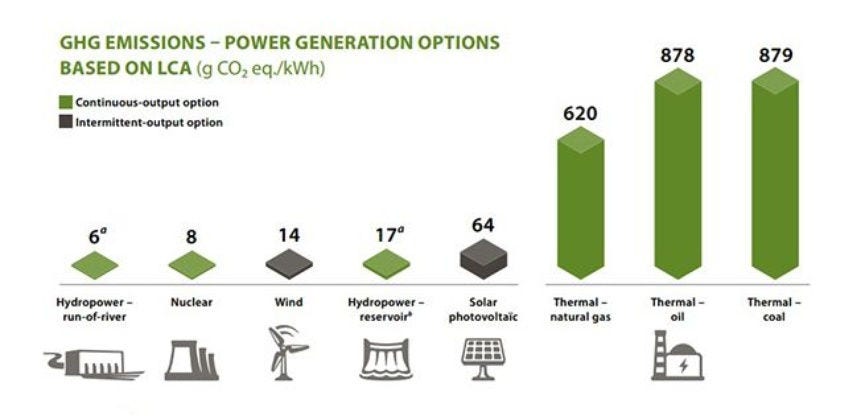
First, the two groups question the clean aspect of hydropower. Let’s see about the science: Québec hydropower is one of the lowest-emission generating options per kilowatthour produced and the only one offering continuous generation. It’s not Hydro-Québec that says it, it’s a university chair that studies life cycle analysis.
Now, with respect to the presence of mercury in hydropower reservoirs: this is a well-known impact of hydropower development, and over 40 years of research and data exist on the subject. NAMRA and Sierra Club don’t talk about the situation in Quebec, but rather mention a project that is in Labrador - Labrador is not in Quebec, and that project is NOT even a Hydro-Quebec project!
Here are the scientific facts on mercury in hydro reservoirs:
- Mercury in hydropower reservoirs is a temporary and well-managed phenomenon.
- There are no known cases of mercury poisoning from fish consumption in Québec.
- Levels of mercury in native populations in Québec are actually lower today than they were before our dams were constructed.
Over decades of hydropower development in Québec, campaigns have increased awareness in communities to the presence of mercury in fish, and consumption guides have been developed in several native languages by Hydro-Québec in collaboration with health authorities and the communities themselves.
Finally, we wonder about the legitimacy of these groups speaking on behalf of Quebec indigenous groups. We have yet to hear a representative of a Quebec indigenous people among them! Meg Sheehan from NAMRA, who makes some pretty strong claims against Hydro Quebec, is in fact an attorney from New Hampshire. And the link for donations goes to an address in Maine, not to a Canadian indigenous group.
Hydro-Québec works hard at establishing and maintaining positive relationships with our indigenous groups. For more information see Hydro-Québec and Indigenous Communities. If you'd like to hear some native leaders speaking about the relationship, watch this video where several spoke at a recent event.
We’re faced with a global climate crisis. Opposing a clean energy project with the potential of displacing fossil fuel generation in nearby markets essentially means that these groups are endorsing the status quo: fossil fuels accounting for a major portion of electricity and heat generation. There’s a cleaner solution: flowing more hydropower to those markets. Hydropower generated in Quebec that is developed in a sustainable way, in collaboration with indigenous groups. A regional solution to the global emergency of climate change: that’s the way forward, for the collective good of all of us in the Northeast.
Gary Sutherland
Hydro-Québec
July 5, 2026, Côte-Nord
ITUM and Hydro-Québec turn an important page in their relationship and sign a historic reconciliation agreement
June 30, 2026, General news
Hydro-Québec is proposing a new residential rate for high-consumption customers
June 26, 2026, Côte-Nord
The Innu First Nation of Nutashkuan and Hydro-Québec sign the Menuitsheutun Agreement, which redefines their relationship